


When Communities Have Information, Development Becomes a Shared Responsibility: BudgIT, Tracka and the Erema Conversation on Sustainable Host Community Development
Erema Community, Ogba/Egbema/Ndoni Local Government Area, Rivers State, Nigeria
Development conversations are changing.
For many years, communities in resource-producing regions have often found themselves at the receiving end of decisions made elsewhere. Projects arrive, announcements are made, and communities are expected to accept outcomes without always having the opportunity to influence the process.
But a new reality is emerging: development is stronger when communities are informed, involved and empowered to ask the right questions.
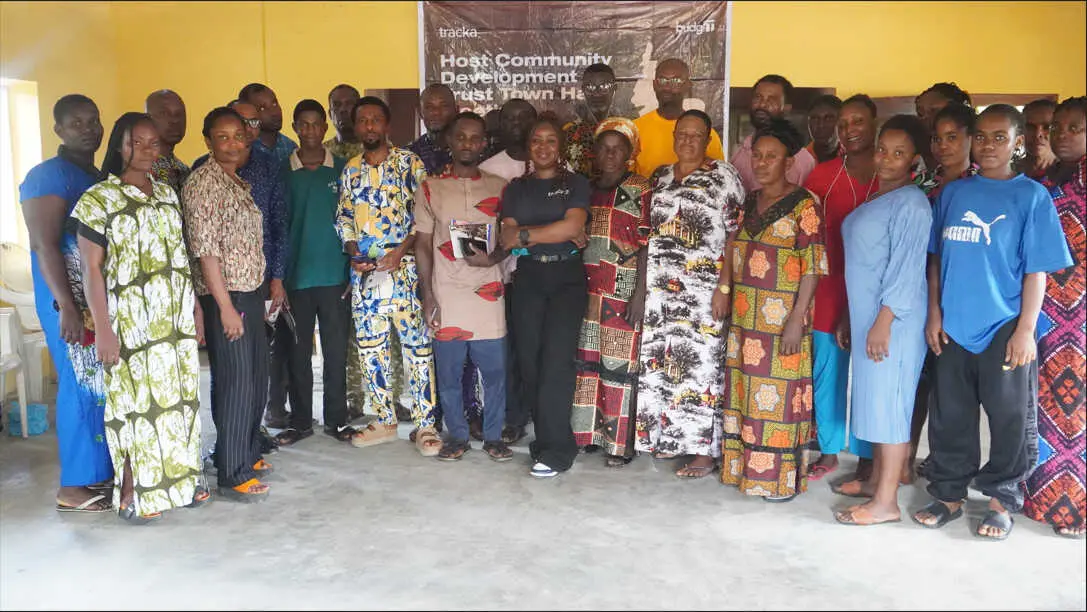
This was the spirit that shaped the BudgIT and Tracka Community Sensitization Town Hall Meeting on Host Community Development Trust (HCDT) held at the Erema Community Town Hall on 27th August 2026.
The gathering brought together men, women, youths, community stakeholders and development actors for an important conversation around the Petroleum Industry Act (PIA), the role of HCDTs, community participation and the future of sustainable development in host communities.
The engagement was supported within the broader movement for transparency, accountability and inclusive development that recognises that communities must not only benefit from development but must also understand the systems that deliver it.
Beyond Projects: Understanding the Power Behind Development
The Petroleum Industry Act (PIA) introduced the Host Community Development Trust (HCDT) as a structured mechanism aimed at ensuring that communities hosting oil and gas operations participate in and benefit from development interventions.
The HCDT framework was designed to move beyond previous models where community development was often based on informal agreements and limited participation.
Under the PIA, host communities have a more defined role in development planning, project implementation and engagement with stakeholders. The objective is not just to build infrastructure but to create sustainable pathways for community advancement.
However, policies only create opportunities. Communities must have the knowledge and capacity to use those opportunities effectively.
This was the gap BudgIT and Tracka sought to address.

Normal mode
BudgIT and Tracka: Turning Information Into Community Action
At the heart of BudgIT’s work is a simple but powerful idea: citizens can demand better outcomes when they understand how systems work. Through Tracka, communities are encouraged to follow development projects, document progress, engage stakeholders and promote accountability in public service delivery.
The Erema engagement reflected this philosophy.
It was not simply a meeting where information was delivered to residents. It was a conversation where community members were encouraged to see themselves as active participants in shaping their development journey.
Because sustainable development does not happen when communities only ask:
“What project is coming?”
It happens when communities begin asking:
“Was this project designed based on our needs? Who is responsible? How do we ensure it lasts?”
The PIA, HCDT and the Future of Sustainable Development
A major focus of the discussion was the sustainability of projects under the HCDT structure.
Participants explored an important question:
How can communities ensure that development projects continue to serve future generations?
• The answer lies in accountability.
• A project should not only be completed. It should be:
• Relevant to community needs
• Properly planned
• Inclusive
• Maintained after completion
• Accessible to different groups within the community
The success of HCDTs depends not only on available funds but on transparency, responsible decision-making and meaningful participation from community members.
Research and stakeholder conversations around HCDTs have continued to highlight that while the framework creates an important opportunity for host communities, effective implementation requires transparency, trust and active participation.

Normal mode
Community Voices: The Call for Needs Assessment Before Projects
One of the strongest messages from the town hall was the need for proper community needs assessment before projects are selected. Residents expressed concerns that some development interventions may not always reflect the most pressing challenges of the people.
They emphasised that communities should be consulted before decisions are made.
A school, healthcare facility, water project or empowerment programme can only create meaningful impact when it responds to the realities of the people it is designed to serve.
The conversation was not against development.
It was a call for smarter development.
Development that begins with listening.

Normal mode
Women Demand Their Place in Development Decisions
Another powerful moment came from the women participants who highlighted the need for stronger inclusion.
They expressed concerns about not always being adequately carried along in development discussions and decision-making processes.
Their contribution reinforced a crucial principle:
A community cannot achieve sustainable development when important voices are missing from the table. Women often experience social and economic challenges differently. Their perspectives are essential in identifying priorities, designing interventions and ensuring that projects create wider impact. Their voices added depth to the conversation around inclusive governance within HCDT structures.

Normal mode
Ensuring Development Reaches Every Clan
Participants also raised concerns about equitable distribution of development benefits across different clans and sections of the community. The discussion highlighted the importance of ensuring that development impact is not concentrated in one location while other groups remain underserved.
True community development must be broad-based.
Every section of the community should feel represented, considered and connected to the benefits of development.
The Larger Movement for Accountability
The conversation in Erema connects with a wider regional effort to strengthen transparency, dialogue and accountability around host community development.
Across the Niger Delta, organisations and development partners, including the Ford Foundation through supported initiatives, have contributed to strengthening conversations around the implementation of the Petroleum Industry Act, improving relationships between communities, regulators, companies and other stakeholders.
The broader lesson is clear:
• Sustainable development is not created by one organisation or one stakeholder.
• It requires collaboration.
• It requires informed citizens
• It requires institutions willing to listen.
• And it requires communities equipped with the knowledge to participate effectively.
Eze Mercy’s Message: Knowledge Creates Stronger Communities
Speaking during the engagement, Eze Mercy, BudgIT Foundation State Coordinator, emphasised the importance of community knowledge and participation.
Her message focused on the need for residents to understand the laws and structures guiding host community development so they can effectively engage with stakeholders.
The objective was not to create conflict. It was to promote informed participation.
A community that understands its rights is better positioned to protect its interests.

Normal mode
Capturing Community Knowledge and Voices
The engagement was documented by LiNCgreen Initiative, we advocate for sustainable development in line with existing laws and policies. For us documentating this process is about ensuring that important conversations do not disappear after the meeting ends. Our coverage reflects its commitment to helping communities understand development systems and confidently engage the structures responsible for delivering them.
The Future of Development Belongs to Informed Communities
The Erema town hall was a reminder that development is not only about buildings, roads or infrastructure. It is about relationships. It is about trust. It is about communities having the confidence and information to participate in decisions that affect their lives. When communities are informed, they become stronger partners.
The future of host community development will not only be determined by how much money is invested.