



The Unfolding Tragedy of Ofiomina-Ama

Normal mode
Ofiomina-Ama is a riverine community in Alakiri, within Okrika Local Government Area of Rivers State, situated in the ecologically sensitive Niger Delta region of southern Nigeria. Geographically, it lies approximately at latitude 4.74°N and longitude 7.08°E, within a network of creeks, estuaries, and mangrove forests that form one of the largest wetland ecosystems in Africa. According to the United Nations Environment Programme, the Niger Delta’s mangroves are among the most productive ecosystems globally, supporting fisheries, protecting shorelines, and sustaining millions of livelihoods. For decades, communities like Ofiomina-Ama have depended on fishing and small-scale farming, but today, that ecological balance is under severe and escalating threat.
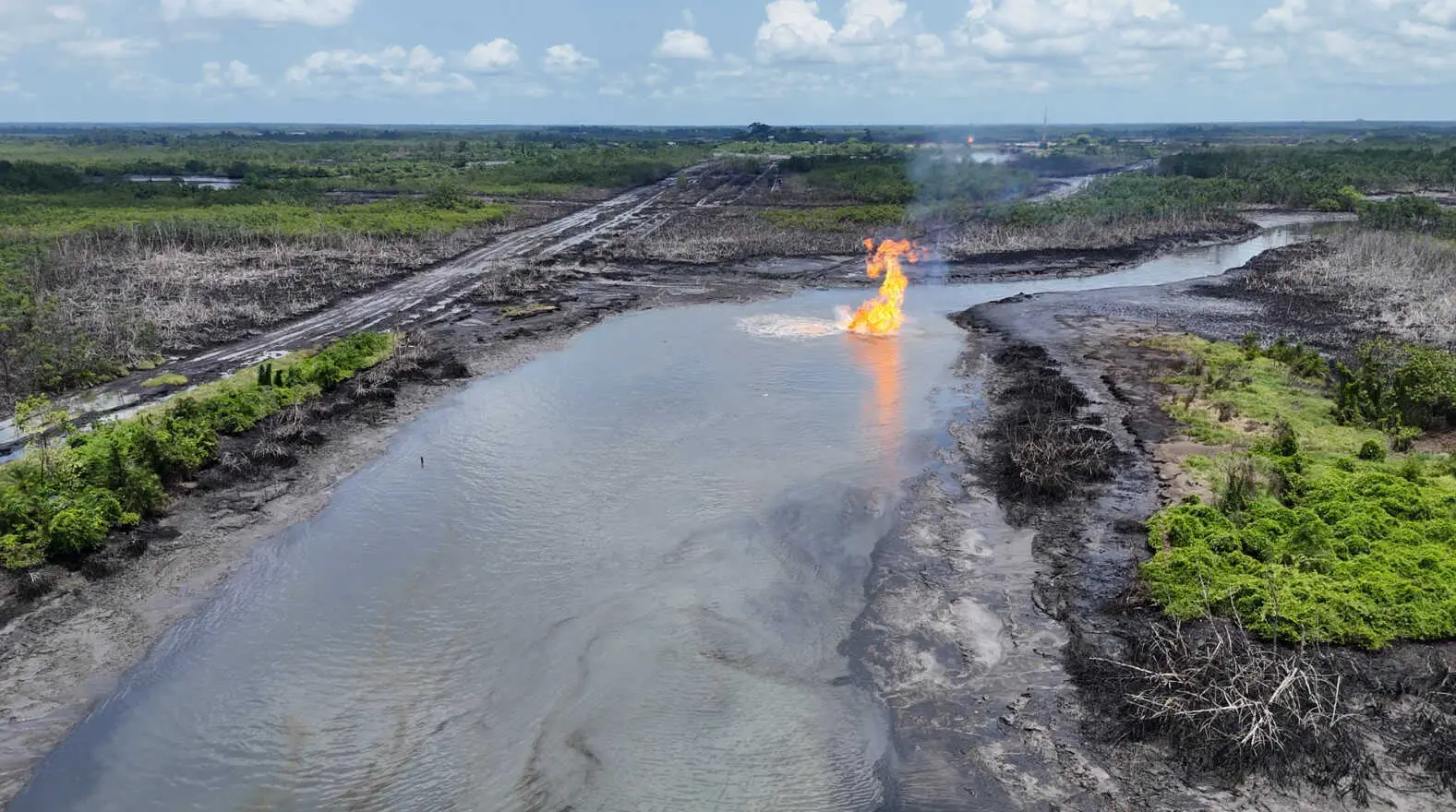
At the center of the current crisis is Well 9, identified as the Realmer & Serial oil wellhead, operated by Builders Nigeria Limited under the supervision of the Nigerian National Petroleum Company Limited. According to a press statement issued on April 9, 2026, the well has reportedly been on fire since February 26, 2024, following what has been linked to a blowout or pressure-related equipment failure. According to field reports and community accounts, the fire ignited crude oil spreading across the water surface, creating a persistent blaze that has continued for over two years. Despite the scale and duration of the incident, there has been little visible evidence of effective containment or coordinated emergency response, raising serious concerns about regulatory oversight and operational accountability.
According to environmental observers and local testimonies, the inferno has released continuous plumes of thick smoke into the atmosphere, while oil slicks have contaminated surrounding water bodies, making fishing nearly impossible. The situation reflects a broader pattern across the Niger Delta, where, according to multiple reports, delayed response to oil-related incidents often worsens environmental damage and prolongs community suffering.
Social activist Francis Nwapa described the situation as “criminal negligence,” underscoring what many communities in the Niger Delta have come to normalize, prolonged environmental destruction with little or no accountability. His statement aligns with longstanding concerns raised by environmental advocates, including Nnimmo Bassey, who has repeatedly argued that weak enforcement and systemic failures continue to enable ecological damage in oil-producing regions.
What is unfolding in Ofiomina-Ama is not just an isolated incident; it is a stark representation of a deeper structural crisis, where fragile ecosystems are continuously exposed to risk, and where the absence of swift intervention allows environmental disasters to evolve into long-term humanitarian challenges.
A Pattern of Escalating Environmental Damage
Over decades of oil exploration in Nigeria, environmental degradation has not only persisted, it has deepened and expanded across communities in the Niger Delta. Oil spills, gas flaring, pipeline leakages, and blowouts have become more frequent and more destructive. According to the National Oil Spill Detection and Response Agency, thousands of oil spill incidents have been recorded across the Niger Delta over the years, with many cases either poorly remediated or left unattended for long periods. Similarly, according to the World Bank, Nigeria remains one of the countries with the highest levels of gas flaring globally, despite existing regulations aimed at reducing the practice.
This rising pattern of environmental damage is not accidental. It reflects deep systemic failures that have been allowed to persist over time. Weak regulatory enforcement continues to undermine environmental laws that exist largely on paper. Aging oil infrastructure, some of which has been in use for decades without proper upgrades, increases the likelihood of leaks and blowouts. Delayed response to spills allows minor incidents to escalate into major ecological disasters. At the same time, corporate and institutional complacency often results in slow remediation and limited accountability.
Beyond these structural issues lies a more uncomfortable reality. In many cases, the crisis is fuelled by corruption and what is commonly referred to as the Nigerian factor, where systems are compromised, oversight is weakened, and the voices of affected communities are overlooked. The people who bear the consequences are often those with the least power to demand change, communities whose rivers, farmlands, and air have been steadily degraded over time.
According to the United Nations Environment Programme report on Ogoniland, decades of oil pollution have led to widespread contamination of soil and groundwater, with some areas requiring up to thirty years for full restoration. This finding underscores the long term nature of the damage and the urgency of prevention.
As Diolu Tobechukwu Prosper notes, the crisis in the Niger Delta reflects a system where communities are continuously exposed to environmental harm without corresponding accountability, turning what should be development into a prolonged experience of loss, neglect, and survival.

Normal mode
Similar Incidents Across the Niger Delta
The fire at Ofiomina-Ama is not an isolated tragedy. It is part of a growing and deeply troubling pattern of oil related disasters across the Niger Delta, particularly in recent years where incidents have become more frequent, more severe, and often more prolonged.
In June 2024 in Nembe, Bayelsa State, operations at the Nembe Creek oil field were shut down following a major leak involving facilities operated by Aiteo Eastern E and P. According to industry reports, the field, which produces tens of thousands of barrels of crude oil daily, was forced to halt production to contain the spill. The leakage exposed surrounding creeks and mangrove ecosystems to crude contamination, disrupting fishing activities and further degrading already fragile environments.
In February 2025 in Ogale, near Port Harcourt in Rivers State, a spill was reported from infrastructure linked to the Shell Petroleum Development Company. According to company disclosures and environmental monitors, the incident occurred after an overflow from a containment system, releasing crude into surrounding areas within the Ogoni axis. This is particularly concerning given that Ogoniland is already undergoing a long term environmental cleanup process.
In May 2024 in Southern Ijaw, Bayelsa State, a spill occurred along a gas delivery pipeline affecting multiple communities. According to the National Oil Spill Detection and Response Agency, the incident led to the discharge of crude oil into nearby water bodies and farmlands, contaminating sources of drinking water and destroying crops. Residents reported increased health challenges and loss of livelihoods in the aftermath.

Normal mode
Across the Niger Delta, these incidents are far from rare. According to the National Oil Spill Detection and Response Agency, hundreds of oil spill incidents are recorded annually, many of which are linked to equipment failure, corrosion, and operational lapses, while others are attributed to sabotage. However, regardless of the cause, the environmental and human consequences remain severe.
According to studies referenced by the United Nations Environment Programme and other research institutions, oil pollution has led to extensive destruction of mangrove forests across the Niger Delta over the years, significantly reducing biodiversity and weakening natural coastal defenses. Mangroves play a critical role in supporting fisheries and protecting shorelines, and their loss has direct implications for food security and climate resilience.
According to environmental data compiled over the past decade, thousands of spill incidents have released millions of litres of crude oil into the Niger Delta environment. This scale of pollution translates into poisoned rivers, degraded soil, and collapsing local economies that depend heavily on natural resources.
What these incidents reveal is a consistent and systemic failure in maintenance, monitoring, and emergency response. Whether caused by technical faults or human interference, the pattern remains the same. Communities are left exposed, ecosystems are damaged, and response efforts are often delayed or insufficient.
The situation in Ofiomina-Ama, where fire now burns on water, is therefore not an anomaly. It is a continuation of a long history of environmental crises that have shaped life in the Niger Delta, where each new incident adds to an already overwhelming burden on both people and the environment.
Environmental and Human Impact
The sustained pollution in the Niger Delta has created one of the most severe and long-running environmental crises in the world, with impacts that are both immediate and intergenerational.
For many communities, the first and most visible loss is livelihood collapse. Fishing grounds that once sustained entire families are now contaminated with crude oil, while farmlands have become infertile due to repeated exposure to hydrocarbons. According to field observations by environmental monitors and community reports, oil sheen on water bodies has made traditional fishing impossible in several riverine settlements, forcing many households into economic uncertainty.
The health impacts are equally alarming. Residents in affected communities frequently report respiratory illnesses linked to prolonged exposure to gas flares and burning oil, as well as skin diseases, eye irritation, and other chronic conditions. According to health risk assessments referenced in environmental studies of the region, long term exposure to petroleum pollutants has also been associated with increased risks of cancer and organ damage, particularly in heavily impacted areas.
Another critical consequence is food insecurity. According to agricultural impact assessments in the Niger Delta, declining fish stocks and reduced crop yields have significantly weakened local food systems. What was once a self-sustaining ecosystem is now increasingly dependent on external food supplies, deepening poverty and vulnerability.

Wide mode
At the ecological level, the damage is profound. Mangrove forests, wetlands, and aquatic biodiversity systems are being steadily destroyed. According to environmental research findings, oil contamination weakens root systems, disrupts breeding grounds for fish, and reduces the natural ability of mangroves to protect coastal communities from erosion and flooding.
A landmark finding from the United Nations Environment Programme report on Ogoniland highlights the scale of the crisis. According to the report, full restoration of polluted environments in parts of the Niger Delta could take 25 to 30 years, even under optimal remediation conditions. The report further documented:
- According to UNEP findings, groundwater contamination is widespread, with pollutants seeping deep into soil layers and water tables used for drinking purposes.
- According to the same assessment, benzene levels in some locations were found to be up to 900 times above World Health Organization safety limits, posing severe long term health risks to exposed populations.
- According to the report, there is also a systemic failure in environmental governance, including weak enforcement of existing regulations and delays in remediation by responsible operators.
If those findings reflected conditions over a decade ago, then the scale of recent and ongoing spills, including repeated blowouts, pipeline failures, and prolonged fires such as the one in Ofiomina-Ama, suggests that the situation may now be even more severe. What was once described as environmental degradation is increasingly becoming a case of accumulated ecological collapse, with consequences that continue to deepen over time.
Rising Voices: Protest and Resistance
The recent wave of protests emerging from Ofiomina-Ama and surrounding communities in Alakiri reflects a turning point in the Niger Delta’s long struggle with environmental injustice. What began as isolated community complaints has now evolved into organized resistance, driven by the lived reality that the crisis is no longer just environmental degradation, but a question of survival, dignity, and justice.
According to community reports and civil society briefings, the mobilization in Okrika Local Government Area has been driven by a coalition of youth groups, traditional voices, and environmental advocates demanding urgent intervention. Their demands remain consistent: immediate containment of the fire at Well 9 in Ofiomina-Ama, independent environmental assessment, and compensation for affected livelihoods.

Normal mode
A significant turning point in public awareness came when a young Niger Delta social influencer and storyteller, known as @coconuthead1 on Instagram, first brought sustained attention to the incident. Through visual storytelling and on ground documentation, he amplified what communities had been experiencing quietly since 2024. According to his documented posts and community engagement, the burning wellhead and river fire were not new developments, but a prolonged crisis that had been largely ignored beyond the immediate locality. His work helped transform what was being overlooked into a visible public emergency.

Normal mode
This highlights a deeper truth: storytelling is not just communication, it is environmental justice in action.
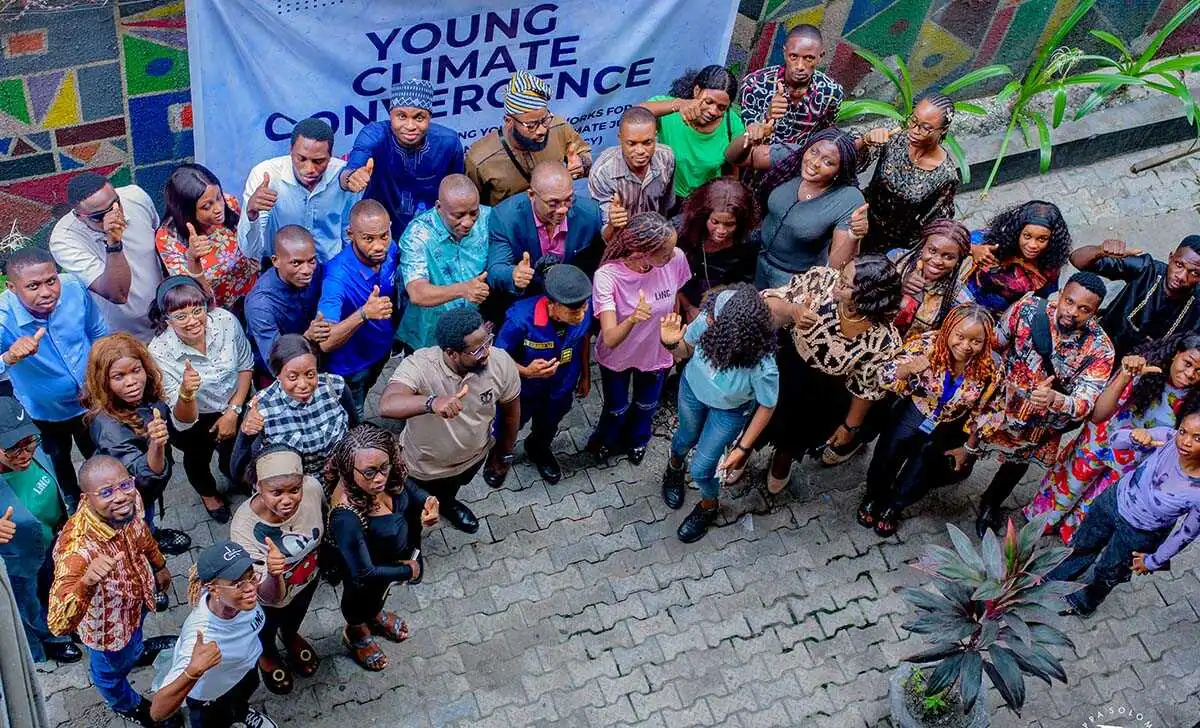
In fragile ecosystems like the Niger Delta, where institutional response is often delayed, storytelling becomes a form of evidence preservation and accountability. It ensures that lived experiences are not erased, and that environmental harm is not normalized into silence. This is why organizations like the Lincgreen Climate Change Initiative remain critical. By documenting, amplifying, and contextualizing community realities, such platforms help convert local suffering into national and global attention, strengthening the pressure for action.
According to community testimonies, residents have expressed that without digital storytelling and independent documentation, many environmental crises would remain invisible, especially in remote riverine areas where official monitoring is limited. This underscores the growing role of citizen journalism and grassroots media in environmental governance.
The protests, therefore, represent more than resistance. They represent visibility finally catching up with reality.
If the Nigerian government fails to act decisively, the consequences extend beyond environmental damage. According to studies on environmental conflict in the Niger Delta, prolonged neglect deepens institutional distrust, increases social tension, and risks destabilizing already vulnerable communities. More importantly, continued ecological decline may push some ecosystems beyond recovery thresholds.
What Must Be Done
The situation demands immediate and structured intervention. Government agencies must enforce environmental regulations without delay, ensure full accountability of operators, and prioritize independent investigation into the Ofiomina-Ama fire incident. Emergency containment and remediation must be treated as urgent humanitarian action, not routine regulatory response.
There must also be investment in real time environmental monitoring systems, stronger community reporting channels, and transparent compensation frameworks for affected populations. Public health monitoring in impacted communities is equally essential, given the long term exposure risks associated with oil fires and contamination.
Failure to act will not only deepen ecological collapse but will also undermine Nigeria’s credibility in global climate governance and transition commitments.
Call to Action

Normal mode
The burning of Ofiomina-Ama is not an isolated incident. It is a warning. A warning that has been ignored for too long in the Niger Delta. A river is on fire, communities are breathing toxic air, livelihoods have collapsed, and yet the response remains slow, fragmented, and insufficient.
This is no longer a matter for reports, promises, or technical committees. It is a matter of urgency, accountability, and human survival.
- We are calling on the Federal Government of Nigeria, the Nigerian National Petroleum Company Limited, regulatory agencies, and all operators involved to act immediately and decisively:
- The fire at Well 9 in Ofiomina-Ama must be contained without further delay
- A full independent environmental investigation must be launched and made public.
- Affected communities must receive immediate relief, medical support, and fair compensation.
- All responsible parties must be held accountable, without exception or delay.
Anything less is not governance. It is negligence.
We are also calling on international partners, including the United Nations Environment Programme, development agencies, and climate accountability networks to urgently intervene, monitor, and support remediation efforts in the Niger Delta. The scale of destruction demands global attention and independent scrutiny.
To civil society organizations, journalists, and storytellers, this is a moment to amplify truth. Silence is no longer neutral. Documentation is protection. Storytelling is resistance. Every image, every report, every testimony matters. Platforms like the Lincgreen Climate Change Initiative and independent voices such as community reporters are now essential to ensuring that these realities are not erased or ignored.
To oil companies operating in the Niger Delta, this is a final reminder that extraction without responsibility is destruction. Profit cannot continue to come at the cost of human lives and ecological collapse.
And to the Nigerian state, the message is clear. If communities continue to burn while institutions delay, then trust will continue to erode, and the consequences will extend far beyond the environment.
The Niger Delta is not a sacrifice zone. It is home to millions of people who deserve safety, dignity, and justice.
If Nigeria is serious about climate leadership, energy transition, and sustainable development, then it must begin here, with Ofiomina-Ama. Not tomorrow. Not after another report. Now.